
The blind spot in the Health and Safety Amendment Act 2026
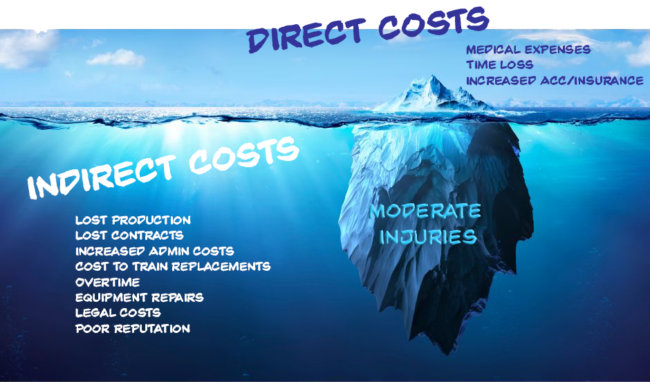
The Health and Safety at Work Amendment Act 2026 is being sold as a “common‑sense” refocus on critical risks. But for many small businesses and their workers, it creates a perverse incentive: if a hazard isn’t likely to kill or catastrophically injure someone, you no longer have to prioritise it. The result is predictable: more strains, sprains, slips, trips and falls, more people off work for weeks, and higher costs for ACC, the health system and industry.
What the Act changes – and what it ignores
The Act’s purpose is now explicitly to focus on critical risks – those with the potential to cause death or serious injury/illness. For small PCBUs (under 20 workers), the primary duty is narrowed to managing critical risks and providing basic welfare, training and PPE for those critical risks only.
That sounds efficient until you look at the injury data:
- “Soft tissue” injuries (strains, sprains, musculoskeletal harm) are the most frequent and costly work injuries, yet they generally do not meet the critical risk definition.
- Submissions to Parliament warned the Bill “ignores evidence that most injuries do not result in serious harm” but that these “more minor” risks account for around 75% of ACC’s work injury costs.
- The Employers and Manufacturers Association noted the changes could leave 650,000 workers in small businesses without PCBU oversight of the most common and chronic types of harm, with costs ultimately picked up by public health, ACC and society.
In other words, the law is telling small businesses to focus on the rare but dramatic, while downplaying the common and expensive.
The real cost of “non‑critical” injuries
ACC costs
Recent ACC data shows:
- In 2025, workplace injuries led to 7 million days of weekly compensation, costing the ACC scheme $815 million. Approx. $617 million due to minor incidents.
- Total cost of active workplace claims has been around $1.26 billion per year (2024–2025). Around $902 million could be attributed to the types of injury the Act no longer requires small businesses to manage.
- Historically, body stressing alone has cost ACC about $140 million per annum, and slips, trips and falls about $135 million per annum – injuries that are overwhelmingly non‑critical in the fatality sense.
Even using conservative assumptions, that implies hundreds of millions of dollars each year in ACC costs driven by moderate, lost‑time injuries that the new Act does not require small businesses to prioritise.
Industry and productivity costs
For industry, the impact is direct:
- Lost productivity from workplace injuries is estimated at $2 billion per year, driven mainly by time off work from moderate injuries.
- In manufacturing alone, annual ACC claims costs now exceed $165 million, with soft‑tissue injuries the largest component and a growing share of injuries involving lost time.
- WorkSafe has explicitly noted that for many small businesses, “the loss of a person due to injury for any period of time can affect productivity severely as expertise is often concentrated in a few people”.
When a key worker is off for six weeks with a back strain, that’s not just an ACC claim: it’s disrupted schedules, overtime, rushed replacements, quality issues and stress on the remaining team.
Why the Act risks degrading safety in small businesses
The Amendment Act creates three dangerous dynamics:
1) A compliance signal that “non‑critical” means “not important”
By legally narrowing small PCBUs’ primary duty to critical risks, the Act sends a clear message: if it won’t kill someone, it’s secondary. In practice, that will:
- Reduce time and money spent on manual handling, housekeeping, fatigue management and low‑height work.
- Shift safety conversations away from the hazards that cause most lost‑time claims.
As the Association of Salaried Medical Specialists submission warned, employers will “no longer be encouraged to address issues such as musculoskeletal harm, work‑related mental harm, and fatigue, all of which have … been increasing”.
2) More moderate injuries, more time off work
Evidence already shows:
- Improvements in work injury trends have been largely in less‑serious injuries (those not requiring more than a week off), while serious harm remains stubborn.
- In some sectors, nearly one in three injuries now involves lost time, up from fewer than one in four two years earlier.
If small businesses scale back controls on non‑critical hazards, the likely outcome is more strains, sprains and slips, more people off for weeks, and higher ACC and employer costs – even if fatalities fall.
3) Costs shifted to workers, ACC and the health system
The EMA submission is blunt: the Bill’s approach “risks leaving 650,000 workers employed in small businesses to manage only ‘critical risks’”, with the majority of common hazards – including musculoskeletal disorders – effectively deprioritised.
Those costs don’t disappear; they shift:
- Workers bear pain, lost income and long‑term disability.
- ACC faces higher claims volumes and levies.
- The public health system absorbs more chronic injury and rehabilitation needs.[3]
Why small businesses should still focus on preventing moderate and lost‑time injuries
Even if the law now allows you to narrow your legal focus, the business case for preventing moderate injuries is stronger than ever.
1) They are your biggest cost driver
- “Non‑critical” injuries account for around 75% of ACC’s work injury costs.
- Soft‑tissue injuries are the most frequent and costly category for many sectors, including manufacturing.
If you only manage critical risks, you’re protecting against the rare catastrophe but leaving the main cost centre untouched.
2) Lost time hits small teams hardest
WorkSafe’s own guidance notes that for small businesses, losing even one person “for any period of time can affect productivity severely” because expertise is concentrated in a few people.
A single six‑week back claim can:
- Disrupt multiple jobs or shifts
- Force expensive overtime or temp labour
- Damage customer relationships and reputation
That’s far more damaging to a 10‑person firm than to a 500‑person corporation.
3) ACC levies and claims experience matter
Your ACC levies are influenced by your claims history. More moderate, lost‑time injuries mean:
- Higher levies over time
- More admin, investigations and claims management
- Greater scrutiny from insurers and clients
Preventing moderate injuries is a direct way to control your insurance‑like costs.
4) Culture and retention
Workers notice what leaders prioritise. If your safety system only cares about “big killers” and ignores daily aches, strains and fatigue:
- People learn to push through pain, making injuries worse.
- Trust in leadership erodes; good staff leave.
- You create a culture where “safety” is a compliance exercise, not a value.
Conversely, a business known for looking after people’s backs, shoulders and mental load attracts and retains better staff.
5) Future‑proofing against regulation and client expectations
Clients, principal contractors and larger PCBUs increasingly demand robust safety performance, not just compliance with the minimum. If your safety system ignores moderate injuries.
- You may lose tenders or be deemed a higher‑risk contractor.
- You’ll be exposed if future regulation or case law tightens again.
Building a system that prevents both critical and moderate harm keeps you ahead of the curve.